AI has changed how SEO works. Traffic growth alone is no longer enough. Many companies see visibility increase but still struggle to turn that into revenue. Rankings improve, impressions go up, but actual business impact stays flat. The gap between data and real results keeps widening as competition becomes more advanced and strategies get more sophisticated.
The difference now lies in how agencies use data, automation, and forecasting. AI SEO isn’t about tools. It’s about systems that connect search to business outcomes. Below we highlight teams that build SEO strategies around measurable growth. First, let’s talk about what fails.
Why AI SEO Still Fails for Most Companies
Many companies adopt AI tools and see nothing change. The technology isn’t the problem. How you use it is the problem. Teams focus on automation without understanding strategy. More output doesn’t mean better performance. Sometimes it means worse.
AI SEO fails because of poor execution and alignment, not lack of tools. Teams automate the wrong things. They measure activity instead of impact. According to our analysts, most companies skip the hard work of building proper systems. The most common issues include:
- Overreliance on automation without strategy;
- Focus on traffic instead of revenue impact;
- Weak integration between SEO and product teams;
- No forecasting or performance modeling;
- Fragmented data across multiple tools.
Solving these issues requires a system-first approach. Tools come second.
What Real AI SEO Systems Look Like
Effective AI SEO runs on structured systems, not isolated tactics. Successful teams connect data, content, and technical SEO into one framework. In reality, most companies skip, this integration separates high performers from everyone else. The core elements of high-performing AI SEO systems include:
- Data driven decision making across all stages;
- Integration with product and marketing workflows;
- Forecast based planning and prioritization;
- Automation used to scale, not replace strategy;
- Continuous performance tracking and iteration.
These elements turn AI SEO into a structured system rather than a set of disconnected actions. When everything is aligned, performance becomes more predictable and easier to scale over time.
1. Seoprofy
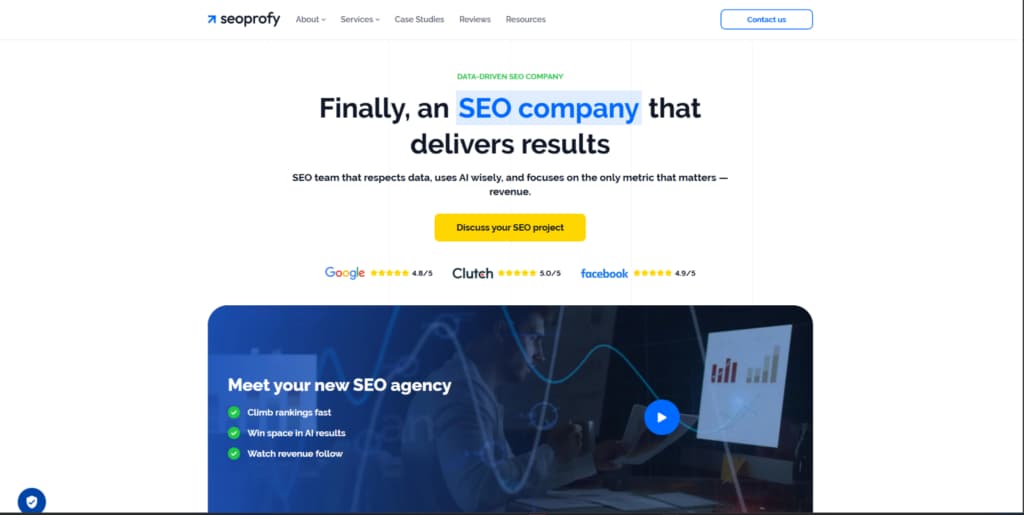
Seoprofy focuses on ROI-driven SEO and AI visibility systems. They use data, forecasting, and proprietary tools to connect SEO performance directly to revenue. For companies evaluating best ecommerce seo companies, this team deserves serious attention. They build systems where every action ties to measurable outcomes.
How This Agency Thinks About AI SEO
Seoprofy treats SEO as a data system rather than a marketing channel. Every decision starts from business goals and revenue targets. AI improves decision-making and prioritization. It never replaces strategy. According to our analysts, this distinction matters more than most people realize. Their approach to AI SEO is structured around measurable outcomes and scalable systems:
- Revenue focused SEO strategies;
- Data driven decision making;
- Forecast based planning;
- Proprietary SearchAnalytics system;
- Continuous performance optimization.
This approach makes SEO performance easier to control and scale. Instead of relying on assumptions, teams operate with clear priorities and measurable impact at every stage.
Where This Approach Delivers the Most Impact
Seoprofy works best with SaaS, ecommerce, and B2B companies wanting predictable growth. Their approach needs proper resources and long-term thinking. Not suitable for quick wins or low budgets. If you want shortcuts, keep moving.
2. Searchbloom
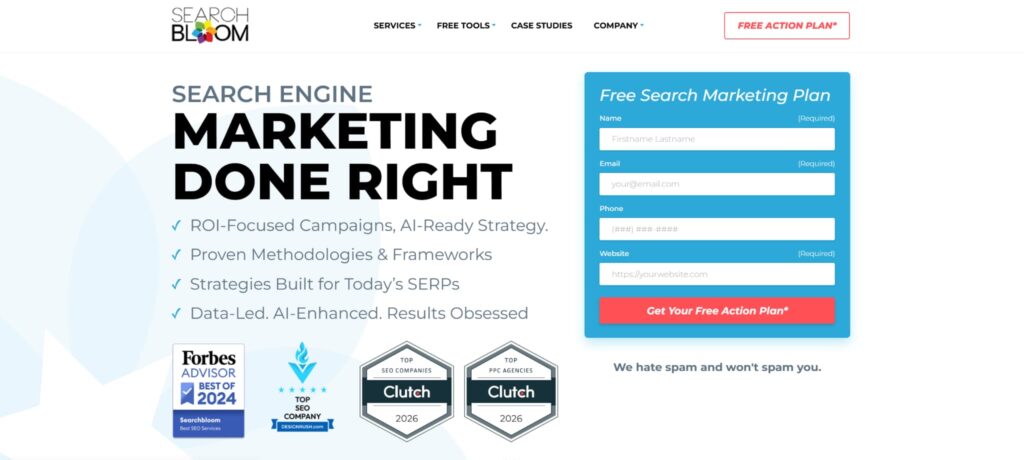
Searchbloom operates as a performance-focused SEO agency with strong execution discipline. Their structured processes produce consistent results.
What Their Execution Looks Like
Searchbloom focuses on consistent execution and performance tracking. Every optimization decision uses data. Their workflows follow a disciplined pattern. In practice, this integration separates , this reliability matters more for enterprise clients than occasional breakthroughs. Their execution model is built around disciplined optimization and measurable results:
- Strong focus on ROI metrics;
- Structured SEO workflows;
- Data backed optimization decisions;
- Technical and content alignment;
- Continuous performance tracking.
Consistency beats volatility when you need predictable growth.
When This Model Works Best
Searchbloom suits companies wanting structured growth and performance consistency rather than experimental approaches. Their model works best for teams that value clear processes, stable results, and predictable scaling instead of constant testing and rapid changes. This makes them a good fit for businesses that prefer steady progress and controlled execution over high-risk strategies.
3. Flying Cat Marketing
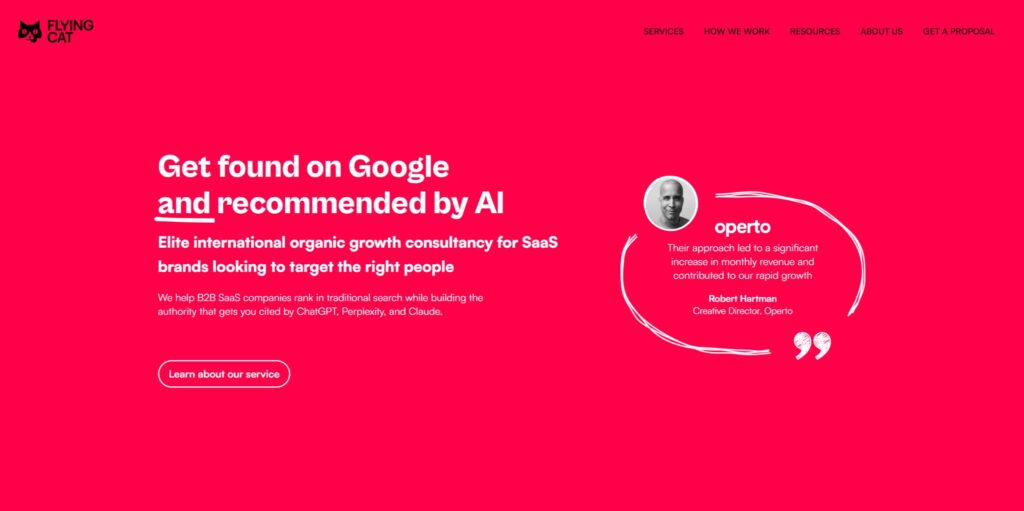
Flying Cat Marketing works as a content-driven SEO agency for SaaS and AI companies. Their content systems drive organic growth.
How They Build Content Systems
Flying Cat approaches SEO through content strategy first. Their editorial processes maintain quality at scale. According to our analysts, their integration with product messaging creates alignment most content shops miss. Their strength lies in building scalable content systems:
- Content driven SEO strategies;
- Focus on SaaS and AI companies;
- Strong editorial processes;
- Integration with product messaging;
- Long term organic growth focus.
Content becomes an asset that compounds rather than decaying.
Where They Deliver the Most Value
Flying Cat works best for content-heavy SaaS companies with complex products that require clear explanation and structured messaging. Their approach is especially effective for teams that need to educate users, break down technical concepts, and build trust through content. This makes them a strong fit for businesses where organic growth depends on well-crafted content that guides users from discovery to understanding and eventually to conversion.
4. Siege Media
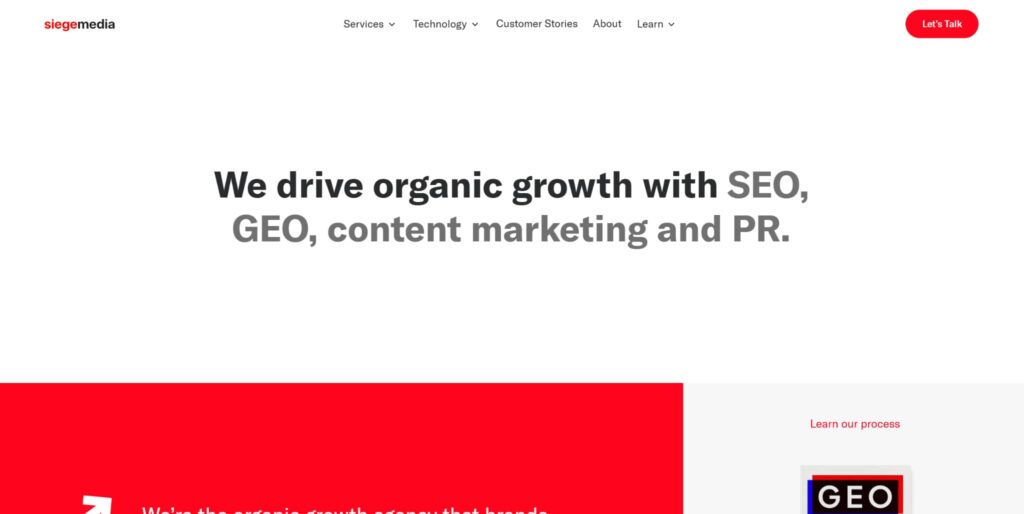
Siege Media combines content and SEO for scalable growth. Their visual production sets them apart.
What Drives Their Results
Siege builds scalable content systems around authority and brand. Their link building strategies focus on quality. This difference matters more than it seems , their visual content drives engagement that text alone cannot match. Their approach focuses on scalable content and authority building:
- Content marketing and SEO integration;
- Link building strategies;
- Visual content production;
- Data informed content creation;
- Scalable growth systems.
Authority compounds when you build it systematically.
Best Fit Scenarios
Siege fits brands that prioritize long term content growth and visibility over short term transactional wins. Their approach works best for companies that want to build authority in their niche, attract consistent organic traffic, and compound results over time. This makes them especially relevant for businesses investing in content as a core growth channel rather than relying on quick ranking gains or direct conversion keywords.
5. Omniscient Digital
Omniscient Digital focuses on SaaS SEO with strong content and data integration. Their product team alignment runs deep.
How They Approach SEO Strategy
Omniscient aligns SEO with product and growth teams from day one. Their analytics focus connects search performance to product metrics. According to our analysts, this integration prevents the “SEO vs product” conflict that kills many programs. Their strategy combines content, data, and product alignment:
- SaaS and B2B specialization;
- Content driven growth strategies;
- Integration with product teams;
- Strong analytics focus;
- Long term SEO systems.
Product-led companies find this approach natural rather than forced.
Who Benefits Most
Omniscient fits SaaS and product-led companies where SEO must integrate directly with product development and growth strategy. Their approach works best for teams that rely on data, continuous iteration, and tight collaboration between marketing and product.
6. Growth Plays
Growth Plays operates as a strategy-driven agency for B2B and AI companies. Their revenue focus runs through everything.
What Their Model Looks Like
Growth Plays builds growth systems around revenue generation. Their integration with sales funnels connects SEO to pipeline. This consistency matters, this B2B focus works better for complex sales cycles than generic approaches. Their model focuses on aligning SEO with revenue generation:
- B2B and AI focus;
- Revenue driven strategies;
- Integration with sales funnels;
- Data driven decision making;
- Strategic content development.
Pipeline matters more than traffic when deals take months.
When They Are a Strong Fit
Growth Plays works best for B2B companies with complex funnels and long sales cycles. Their approach is especially effective for businesses where deals take time and require multiple touchpoints before conversion. They are a strong fit for teams that need SEO to support pipeline generation rather than just traffic growth.
How to Tell If an AI SEO Agency Will Actually Deliver
Choosing an agency requires focus on business alignment and execution capability. Price doesn’t predict performance. Neither do slick decks. According to our data, companies that evaluate on these criteria see 3x better ROI. To evaluate an AI SEO partner, focus on these criteria:
- Clear connection between SEO and revenue;
- Ability to forecast performance;
- Strong data and analytics systems;
- Integration with product and marketing;
- Scalable processes and execution.
These factors separate real capability from marketing hype.
Final Thoughts
AI SEO only works when tied to real business outcomes. The agencies above represent different approaches, but they all focus on building systems that connect search performance to revenue. Tools alone don’t create results. What matters is how data, content, and strategy work together within a structured process.
Choosing the right partner comes down to understanding your own goals, resources, and growth model. Some teams prioritize content, others focus on product alignment or pipeline generation. The key is selecting an approach that fits your business rather than chasing trends. When SEO is built around clear priorities and measurable impact, it becomes a reliable growth channel instead of an unpredictable experiment.