The problem is not that people lack access to good information. It is that maintaining consistency over time remains genuinely difficult. Most platforms require more time, more focus, or more self-discipline than the average person can reliably produce after work, parenting, or simply existing.
This ranking evaluates platforms on one criterion: how effectively they reduce friction between the intention to improve and the daily execution of that intention. Not course depth. Not production quality. Not instructor prestige. How much resistance remains when you open the app.
What Makes a Platform Easy to Stay Consistent With
We asked whether the platform makes tomorrow’s session easier than today’s. Platforms that reduce cognitive load rank higher. Platforms that externalize discipline and do not depend on the user’s unreliable reservoir of willpower rank higher. Platforms that make starting trivial and continuing automatic occupy the top positions.
We assessed each service against these specific friction points:
- Session length under ten minutes reduces the time barrier;
- Clear next action eliminates daily choice exhaustion;
- Active response is required during the learning process;
- Progress is visible in small, daily increments;
- Return is prompted by design, not user memory.
The gap between intention and action is where self-improvement dies. These platforms either bridge that gap or widen it.
1. RiseGuide
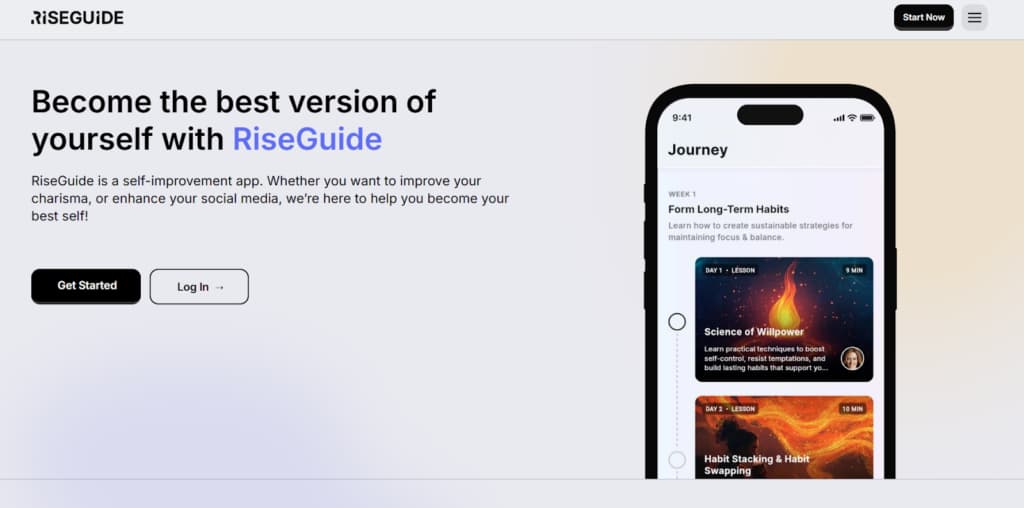
RiseGuide requires six minutes or less per session. You do not schedule learning. You fit it between meetings, after lunch, or before sleep. Content is organized into learning paths rather than libraries. Communication. Confidence. Memory. You select one path, and the application tells you what to do today.
Why It Has the Lowest Daily Friction
Short formats eliminate the “I don’t have time” objection. Seven minutes is a coffee pour. A bathroom break. A single email. Nobody is too busy for this duration.
Structure eliminates decision fatigue. You selected your path weeks ago. Today, you simply open the application and proceed.
Several mechanisms lower the initiation barrier substantially:
- Lessons run three to seven minutes in all cases.
- Daily to-do lists remove choice entirely.
- Interactive exercises demand active participation.
- SEEK tool retrieves expert answers to user questions.
- Progress streaks reward showing up, not intensity.
The experience resembles a gym where each workout lasts six minutes, and the equipment is already configured for you.
Where Friction Still Exists
The platform cannot attend sessions on your behalf. That responsibility remains yours. Some weeks you will not open it. Some weeks you will open it and disengage.
Results accumulate slowly. You will not perceive meaningful change after ten lessons. These characteristics reflect behavioral development rather than product deficiencies:
- Consistency remains user-dependent; no workaround exists.
- Progress is gradual and may feel imperceptible.
- Initial feature density can overwhelm new users.
- Content requires personal adaptation to specific contexts.
Behavioral change is slow because behavior is resistant to modification. This is the central challenge the format addresses.
2. MasterClass
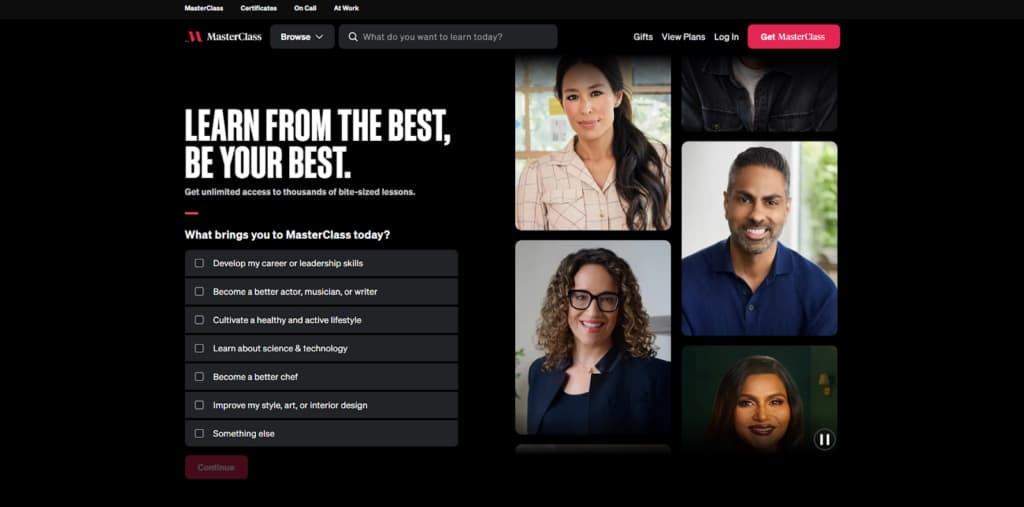
MasterClass produces courses taught by recognized experts and celebrities. Production values are exceptional. Cinematography, narrative structure, and editorial polish distinguish the service from conventional educational platforms.
Where It Reduces Friction
Narrative instruction improves recall. Chris Voss’s hostage negotiation scenarios persist in memory. David Mamet’s writing sessions convey aesthetic principles through demonstration. Low-friction elements:
- Expert narratives improve concept retention.
- High production values sustain passive attention.
- Downloadable workbooks accompany most courses.
- Celebrity presence reduces initiation resistance.
These characteristics make the platform easy to start and engaging to watch. They do not, however, require learners to practice skills on a consistent basis.
Where It Increases Friction
Sessions run thirty to forty minutes. You do not watch MasterClass. You schedule MasterClass. These are distinct activities. Friction points in daily use:
- Episode length exceeds available time windows.
- Passive consumption requires no active response.
- No mechanism compels skill application.
- Single course requires four to six hours total.
- Return is unprompted and user-driven.
MasterClass serves a periodic immersion effectively. It does not support daily practice.
3. Mindvalley
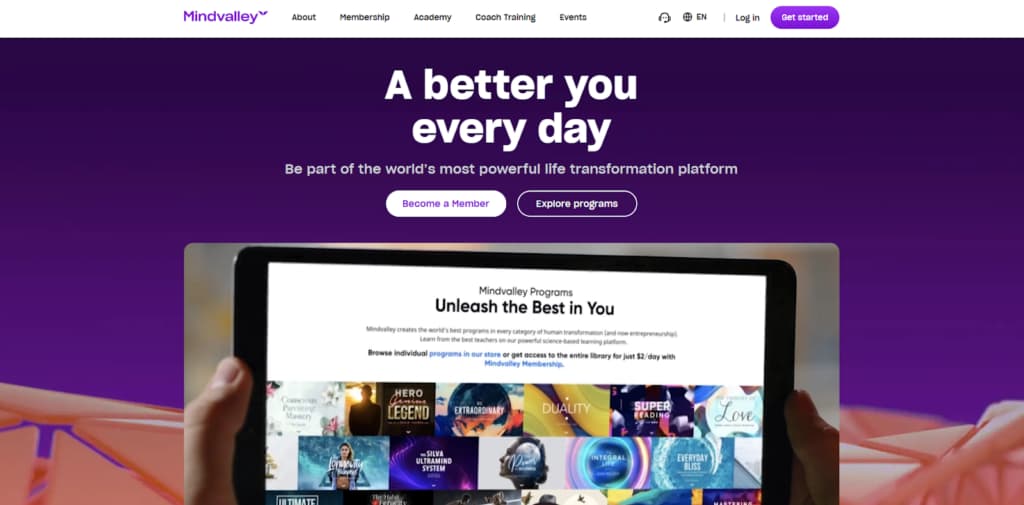
Mindvalley develops curricula focused on personal transformation. Spiritual development, longevity, productivity, and relationships appear prominently. Courses span six to eight weeks. Instruction comes from movement leaders and published authors.
Where It Supports Commitment
Cohort-based enrollment creates accountability mechanisms. Users begin with peers and receive scheduled content. This structure reduces attrition relative to self-paced alternatives. Commitment-supporting features:
- Scheduled content removes pacing decisions.
- Community accountability increases persistence.
- Embedded practices extend beyond video instruction.
- Transformation framing justifies time investment.
These elements help sustain engagement over multi-week programs. However, they also assume that users can consistently allocate longer blocks of focused time.
Where It Creates Friction
Daily lesson materials often exceed twenty minutes plus supplementary practice. This represents substantial time and attention requirements. Friction sources:
- Lesson length exceeds micro-learning thresholds;
- Spiritual framing may not align with user preferences;
- High engagement demands produce mid-course drop-off;
- Production style prioritizes inspiration over brevity.
Mindvalley asks for significant commitment. Some users can provide this. Many cannot sustain it.
4. Studio
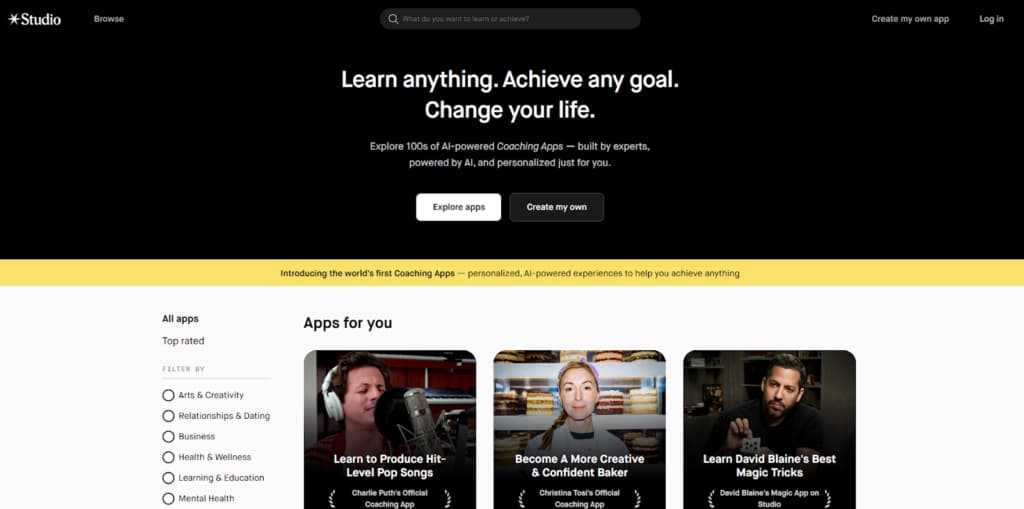
Studio offers project-based courses for creative professionals. Music production, photography, culinary arts, and design comprise the core catalog. Instruction comes from working practitioners rather than academics.
Where It Encourages Action
Project requirements compel output. Course completion depends on submitting tangible work. This represents a stronger application mechanism than passive alternatives. Action-supporting mechanics:
- Course completion requires submitted work.
- Practitioner instructors teach current techniques.
- Narrow topic focus supports specific skill acquisition.
- Peer feedback creates mild accountability pressure.
These elements increase the likelihood that learners will produce real outcomes rather than only consume content. However, they still assume that users can dedicate longer, uninterrupted sessions rather than brief daily practice.
Why It’s Hard to Do Daily
Creative work typically requires environmental preparation. Digital audio workstations need to be opened, camera equipment positioned, and existing material reviewed. These steps demand more time and setup than a brief daily session allows. Daily practice barriers include the following:
- Session length assumes dedicated time blocks.
- Equipment and environment preparation are required.
- No daily prompting or reinforcement exists.
- Skill depth is prioritized over practice frequency.
Studio functions effectively for users with scheduled project time. It does not accommodate brief daily engagement.
5. Skillshare
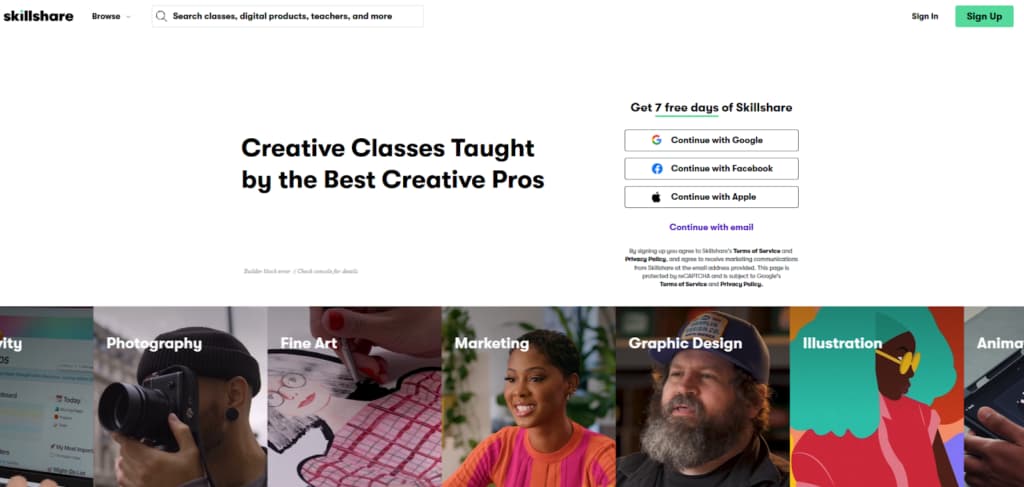
Skillshare operates as a subscription-based marketplace for creative and professional skills. Teachers are independent practitioners. Course formats include segmented video instruction with assigned projects.
Where It Helps You Start
Short video segments reduce the barrier to course initiation. Users watch one segment. This is manageable. Initiation advantages:
- Video length is typically under six minutes.
- Project submission verifies skill application.
- Extensive catalog breadth across creative domains.
- Mobile interface supports flexible access.
These features make it easier for users to begin learning sessions. They do not, however, guarantee that learners will return consistently over time.
Where It Relies on Self-Discipline
Skillshare provides no prompting. Users must remember to open the application. Users must remember to continue specific courses. Users must remember to practice. This constitutes multiple memory tasks before learning occurs. Self-discipline dependencies:
- No daily prompting or scheduled reinforcement exists.
- Practice depends entirely on user initiative.
- Instructor quality varies substantially.
- Platform incentives favor browsing over completion.
Skillshare enables motivated users to acquire skills. It does not manufacture motivation or maintain consistency.
6. Deepstash
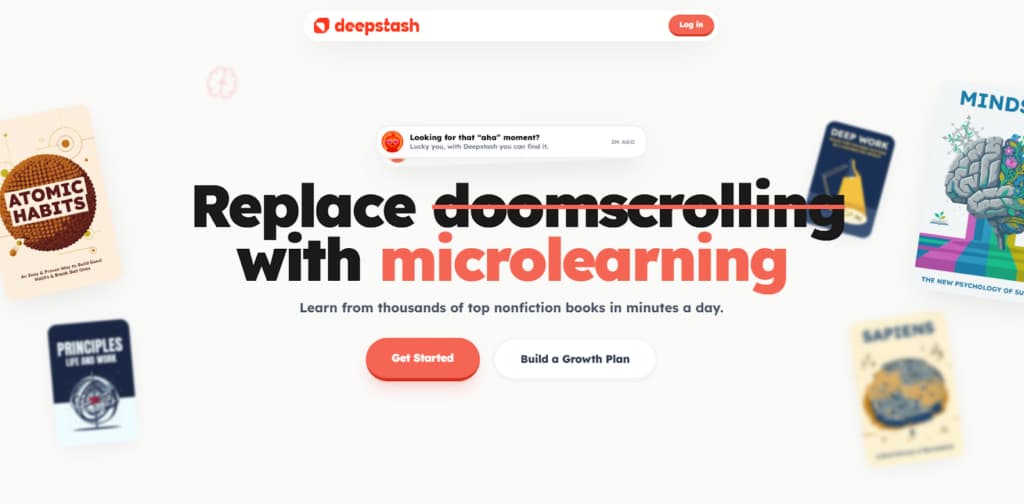
Deepstash presents ideas as individual cards. Each card contains one insight extracted from books, articles, or podcasts. Navigation is swipe-based. No courses, no progression paths, no assessments.
Where It Removes Friction
Entry friction is negligible. Users open the application, read one card, and close it. Session duration averages under one minute. Friction-eliminating characteristics:
- Session length under one minute;
- No login friction after initial setup;
- Visual presentation supports rapid scanning;
- Social sharing functions are integrated;
- Choice is eliminated through single-feed design.
These elements make the platform extremely easy to access at any moment. However, low entry effort alone does not create the conditions required for sustained skill development.
Why It Rarely Leads to Skill Development
Collection does not constitute learning. The application optimizes for accumulation rather than retention. Users build libraries of insights they will not revisit. Skill formation gaps:
- No application mechanisms exist.
- Original context is stripped from each idea.
- No repetition or spaced exposure occurs.
- Consumption is passive by design.
- Progress is neither defined nor measured.
Deepstash functions effectively as an inspiration feed. It does not support skill acquisition or behavior change.
Conclusion
Long-term development depends less on exceptional content and more on consistent engagement. Platforms that reduce the effort required to start and continue tend to produce more reliable behavioral outcomes than those that rely on user motivation alone. Format, not just information quality, determines whether learning becomes a habit.
Within this framework, Riseguide ranks highest because its structure minimizes daily friction and embeds practice into short, repeatable sessions. Other platforms serve valuable roles in inspiration, depth, or idea exposure, but they are less optimized for consistent, day-to-day skill application.